
In the vast and often dramatic history of the automotive industry, very few cars have generated as much debate, hope, criticism, and emotional response as the Tata Nano. It began as a revolutionary idea—an ambitious attempt to provide safe, affordable mobility to millions. While its journey was filled with challenges shaped by perception and market realities, the story was never truly finished.
Now, with the arrival of the Tata Nano 2026, Tata Motors is not simply relaunching a familiar name. It is rewriting its meaning entirely. The Tata Nano 2026 represents a philosophical reset. It is no longer about being the cheapest car on the road. Instead, it is about becoming the smartest, cleanest, and most practical urban mobility solution possible in today’s world.
In an era where sustainability, efficiency, and intelligent design matter more than ever, the Tata Nano 2026 asks a powerful question: What is the most sensible way to move through crowded cities while reducing cost, stress, and environmental impact? The answer lies in this completely reimagined urban capsule.
Design: From “Affordable” to “Aspirationally Intelligent”
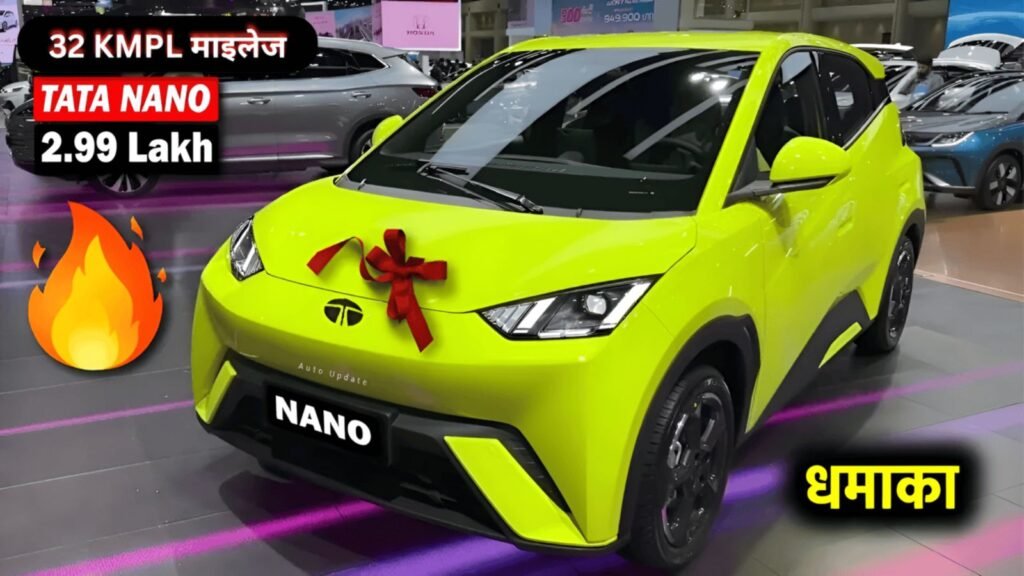
The first thing that becomes clear about the Tata Nano 2026 is that it shares nothing visually with its predecessor except the name. Gone are the soft, economy-focused lines that once defined it. In their place stands a confident, modern, mono-volume tall-boy design that maximizes cabin space within a compact footprint of approximately 2.5 meters.
The silhouette is upright and purposeful. Short overhangs, a sharply sloped windshield, and wide glass panels create an airy and open feel. The Tata Nano 2026 embraces its compact dimensions rather than hiding them. It looks clever, not compromised.
At the front, Tata’s updated “Humanity Line” lighting signature stretches across the fascia in a slim LED strip, giving the car a futuristic and friendly digital face. The headlights sit seamlessly within the bodywork, maintaining a clean aesthetic. This subtle lighting design adds character without unnecessary aggression.
The rear features a large single-piece hatch and vertical LED tail lamps that enhance visibility and style. The doors are generously proportioned, allowing easy ingress and egress even in tight parking spots. Lightweight materials such as aluminum and advanced composites are used strategically, reducing overall mass and improving efficiency.
The Tata Nano 2026 radiates the confidence of a car designed with purpose. It is not flashy. It is not oversized. It is practical, optimistic, and urban at heart.
Powertrain: Pure Electric for a New Era
The true heart of the Tata Nano 2026 lies beneath its compact exterior. This reboot embraces electrification fully. Unlike its petrol-powered predecessor, the Tata Nano 2026 is built as a pure electric vehicle from the ground up.
A compact liquid-cooled lithium-ion LFP battery pack sits neatly beneath the floor, lowering the center of gravity and improving stability. A single rear-mounted electric motor powers the rear wheels, maintaining the distinctive rear-engine layout but now delivering smooth, silent acceleration.
Performance figures are modest but perfectly suited to urban life. The Tata Nano 2026 is not built for highways or high-speed thrills. Instead, it delivers brisk acceleration from 0 to 60 km/h in city-friendly time, allowing quick overtakes and confident merging in traffic.
The real-world driving range is expected to fall between 180 to 200 kilometers on a single charge—more than sufficient for daily commutes, grocery runs, and weekend errands. For most urban families, this range comfortably covers an entire week of driving.
Charging is simple. Using a standard AC 2.3 kW home charger, the battery can reach 80% in around 8 to 10 hours. This makes overnight charging practical and convenient. The running cost drops dramatically compared to petrol vehicles, restoring the Nano’s original promise of accessible mobility—but now with zero tailpipe emissions and near-silent operation.
With the Tata Nano 2026, liberation comes not only from fuel expenses but also from pollution and noise.
Interior: Simplicity with Purpose
Step inside the Tata Nano 2026, and the philosophy of intelligent minimalism becomes even clearer. The cabin is bright, uncluttered, and surprisingly spacious for its footprint. The tall-boy design allows impressive headroom, while thoughtful seat placement ensures adequate legroom for four adults in a 2+2 configuration.
The dashboard is streamlined and modern. Instead of complex hardware, a compact digital instrument cluster displays essential driving information. A dedicated smartphone dock replaces traditional infotainment systems, turning your phone into the navigation and media center. This reduces cost and hardware complexity while keeping functionality flexible and upgradable.
Materials inside the Tata Nano 2026 reflect sustainability. Recycled nylon fabrics, plant-based bio-resins, and easy-to-clean surfaces dominate the cabin. Everything feels durable and practical rather than decorative.
Storage solutions are cleverly integrated. There may not be a conventional glovebox, but under-seat compartments and spacious door pockets compensate effectively. Each element inside the Tata Nano 2026 serves a purpose, and nothing feels unnecessary.
The result is an honest and refreshing interior—one that prioritizes usability over excess.
Platform & Driving Dynamics: Agile and Grounded
Built on a purpose-designed lightweight EV skateboard platform, the Tata Nano 2026 benefits from structural rigidity and improved weight distribution. The battery placement ensures stability, while the rear-wheel-drive configuration offers nimble maneuverability.
Urban agility is where the Tata Nano 2026 shines. Its compact dimensions allow effortless navigation through congested streets and tight parking spaces. The turning radius is expected to be extremely tight, making U-turns and narrow lane maneuvers stress-free.
Suspension tuning focuses on comfort. Indian city roads can be unpredictable, and the Tata Nano 2026 is calibrated to absorb potholes and speed breakers with composure.
Safety receives serious attention this time. The reinforced high-strength steel passenger cage, dual airbags, ABS with EBD, and rear parking sensors come as standard. Unlike earlier perceptions, the Tata Nano 2026 is engineered to meet and exceed modern safety norms for micro-cars.
This is no longer an experimental idea—it is a mature and responsible product.
Technology: Focused and Functional
Technology in the Tata Nano 2026 is designed as an enabler rather than a distraction. A dedicated companion app allows owners to monitor battery health, schedule charging sessions, and pre-condition the cabin temperature before stepping inside.
Over-the-air updates ensure that software improvements can be delivered without dealership visits. Connectivity features remain practical and streamlined, avoiding unnecessary complexity.
The Tata Nano 2026 does not overwhelm drivers with screens or gimmicks. Instead, it enhances the core experience: affordable, low-stress urban mobility.
Who Is the Tata Nano 2026 For?
Unlike its predecessor, the Tata Nano 2026 is not trying to serve everyone. It focuses on specific, growing urban audiences:
-
Urban Eco-Conscious Buyers: Individuals seeking a second car with a small carbon footprint.
-
Young Professionals & Students: A stylish and budget-friendly entry into electric mobility.
-
First-Time EV Owners: A simple, unintimidating gateway into the EV world.
-
Fleet Operators & Smart Cities: Ideal for last-mile delivery, shared mobility services, and campus transportation.
The Tata Nano 2026 understands that modern urban life demands smarter, smaller, and more sustainable solutions.
Conclusion: A Redemption Story Done Right
The Tata Nano 2026 is more than a comeback—it is a reinvention grounded in hindsight and wisdom. It transforms a once-controversial symbol into an icon of intelligent urban mobility.
Where the original focused on affordability alone, the Tata Nano 2026 emphasizes sustainability, efficiency, safety, and thoughtful design. It shifts the narrative from “the world’s cheapest car” to “the world’s most sensible city EV.”
It may not aim to revolutionize an entire nation’s transport system overnight. But it offers something equally meaningful: a polished, ethical, and genuinely practical solution for today’s crowded cities.
The Tata Nano 2026 stands as proof that lessons learned can lead to smarter futures. It is compact yet confident, minimal yet meaningful, and affordable without apology.
The Nano is back—and this time, it finally carries the right idea forward.